Representing victims of medical malpractice across Ontario

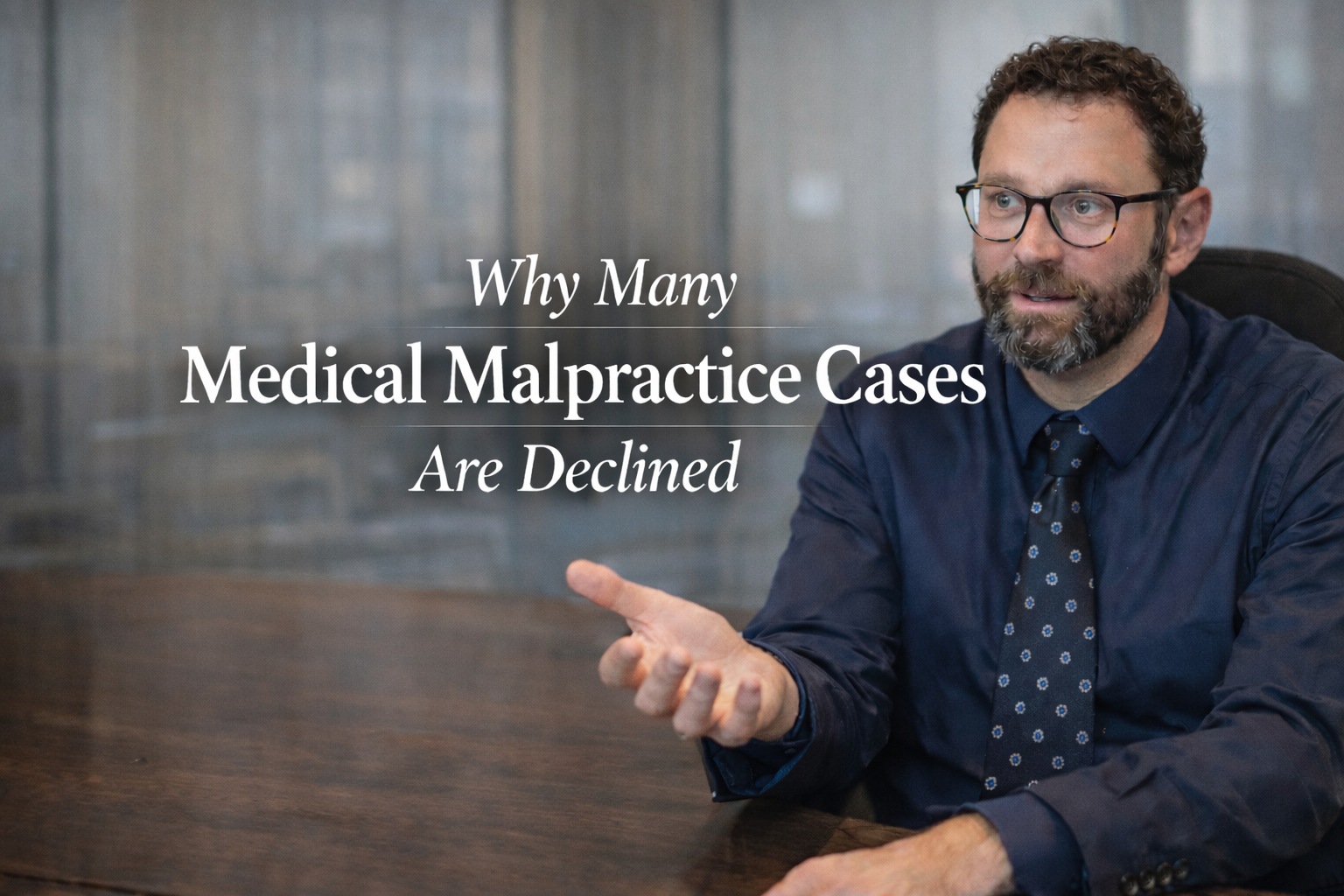
Why Many Medical Malpractice Cases Are Declined in Ontario

Ontario medical malpractice lawyer explaining why some cases cannot proceed

One of the hardest conversations a medical malpractice lawyer has is telling someone that they cannot offer representation.

People often contact a lawyer because something went terribly wrong in medical care – a serious complication, a permanent injury, or the death of a loved one. When a case is declined, it can feel confusing or even unfair.

This post explains why many medical malpractice cases in Ontario are declined, even when the outcome was tragic, and what factors lawyers must consider before taking a case forward.

A Bad Outcome Is Not the Same as Medical Negligence

The most common misconception about medical malpractice is that a poor outcome automatically means negligence.

Medicine involves risk. Even with appropriate, competent care:

  • Treatments can fail

  • Conditions can progress

  • Complications can occur

  • Patients can deteriorate rapidly

Medical malpractice is not about whether the outcome was bad. It is about whether the healthcare provider failed to meet the accepted standard of care, and whether that failure caused preventable harm.

If the standard of care was met, a case cannot succeed even if the result was devastating.

The Standard of Care Is Often the Biggest Barrier

To succeed in a malpractice claim, it must be shown that a reasonable physician or healthcare provider would have acted differently in the same circumstances.

Cases are often declined because:

  • The care fell within an acceptable range of medical judgment

  • The condition was difficult to diagnose

  • Symptoms were vague or non-specific

  • Decisions made at the time were medically defensible

Hindsight can make things appear obvious, but courts assess care based on what was known at the time, not what became clear later.

Causation: The Most Common Reason Cases Are Declined

Even where a medical error may have occurred, many cases fail on causation.

Causation asks a difficult but critical question:

Would earlier or different care likely have changed the outcome?

Cases are frequently declined because:

  • The disease or condition was already too advanced

  • Earlier diagnosis would not have altered treatment options

  • The injury was unavoidable given the circumstances

  • Expert evidence cannot support a causal link

In Ontario, it is not enough to show that care was sub-optimal. It must be shown that the error made a meaningful difference to the outcome.

Damages Must Justify the Cost of Litigation

Medical malpractice litigation is expensive and time-consuming. It typically requires:

  • Extensive medical records

  • Multiple independent medical experts

  • Years of litigation

  • Significant financial risk

As a result, cases are often declined where:

  • The injury was temporary

  • There is minimal long-term impact

  • The financial and personal cost of litigation outweighs potential recovery

This can be difficult for clients to hear, but it is a practical reality of malpractice law in Ontario.

Expert Medical Support May Not Be Available

Medical malpractice cases almost always depend on expert medical evidence.

A case may be declined if:

  • No qualified expert is prepared to criticize the care

  • The medicine supports the defence position

  • Expert opinions are too divided or uncertain

Without credible expert support, a case cannot succeed, regardless of how concerning the care appears.

Limitation Periods Can Bar Otherwise Valid Claims

Some cases are declined because it is simply too late to start a lawsuit.

Ontario has strict limitation periods, including:

  • A general two-year limitation from discovery

  • Ultimate limitation periods that can bar claims entirely

If these deadlines have passed, the court may not allow the case to proceed, even if negligence occurred.

Systemic Problems Do Not Always Equal Legal Liability

Families often describe experiences involving:

  • Overcrowded hospitals

  • Staffing shortages

  • Poor communication

  • Delays caused by system strain

While these issues are real and deeply concerning, they do not always translate into legal liability unless they result in provable negligence causing harm.

Declining a Case Is Not a Judgment on the Experience

When a lawyer declines a case, it is not a statement that:

  • The care was acceptable

  • The harm was insignificant

  • The experience does not matter

It is a legal assessment based on evidence, medical standards, and the realities of litigation.

Many declined cases reflect systemic issues in healthcare, not individual legal fault.

Why Honest Screening Matters

Careful case screening protects:

  • Clients from years of stressful litigation with little chance of success

  • Families from false hope

  • The integrity of the legal process

An honest assessment at the outset is often the most responsible advice a lawyer can give.

When to Seek a Second Opinion

In some situations, it may be reasonable to seek another legal opinion, particularly where:

  • New medical information becomes available

  • A diagnosis is made much later

  • Expert opinions evolve

However, multiple consultations will usually lead to the same conclusion if the core legal barriers remain.

Final Thoughts

Medical malpractice law in Ontario sets a high bar. That standard exists to distinguish tragic outcomes from legally actionable negligence.

If your request for representation is declined, it does not mean your concerns are invalid. It means that, based on current evidence and law, the cost and risk of pursuing a lawsuit may outweigh the likelihood of a successful outcome.

Understanding why cases are declined can help set realistic expectations and provide clarity during an already difficult time.

Recent Posts