Defining a Winning Business Strategy for Your PI Firm
How plaintiff PI firms build long-term strategy and growth. From the 2026 LIF webinar Defining a Winning Business Strategy for Your PI Firm.
How plaintiff PI firms build long-term strategy and growth. From the 2026 LIF webinar Defining a Winning Business Strategy for Your PI Firm.
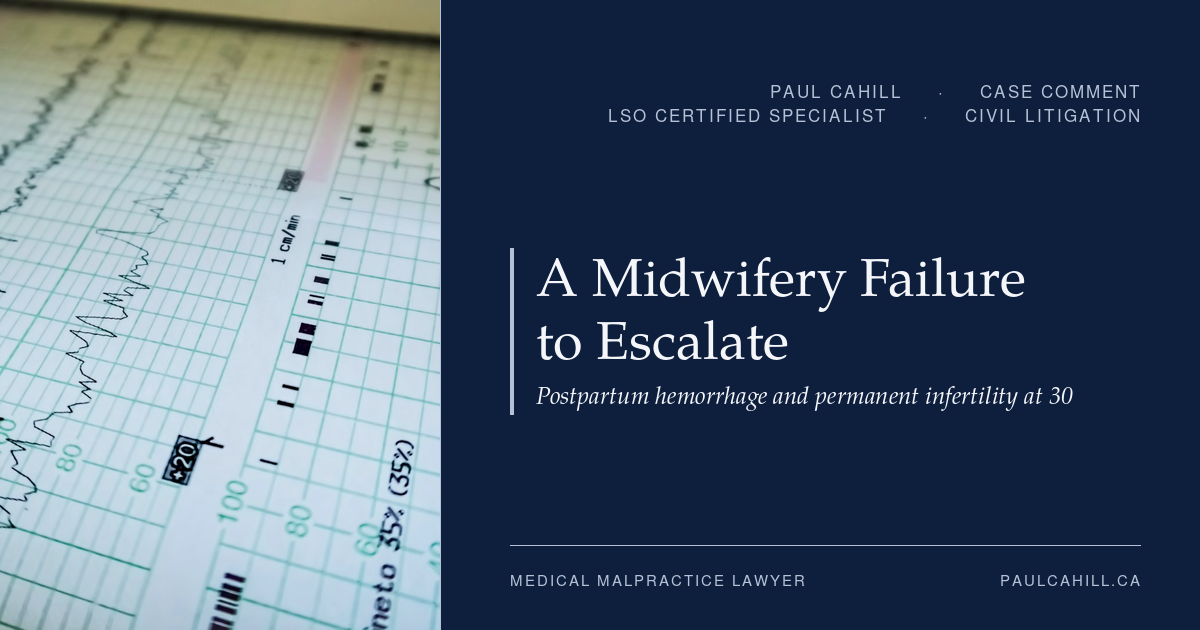
Ontario midwifery negligence case study: failure to escalate to obstetrical consultation, postpartum hemorrhage, emergency hysterectomy, infertility at 30.
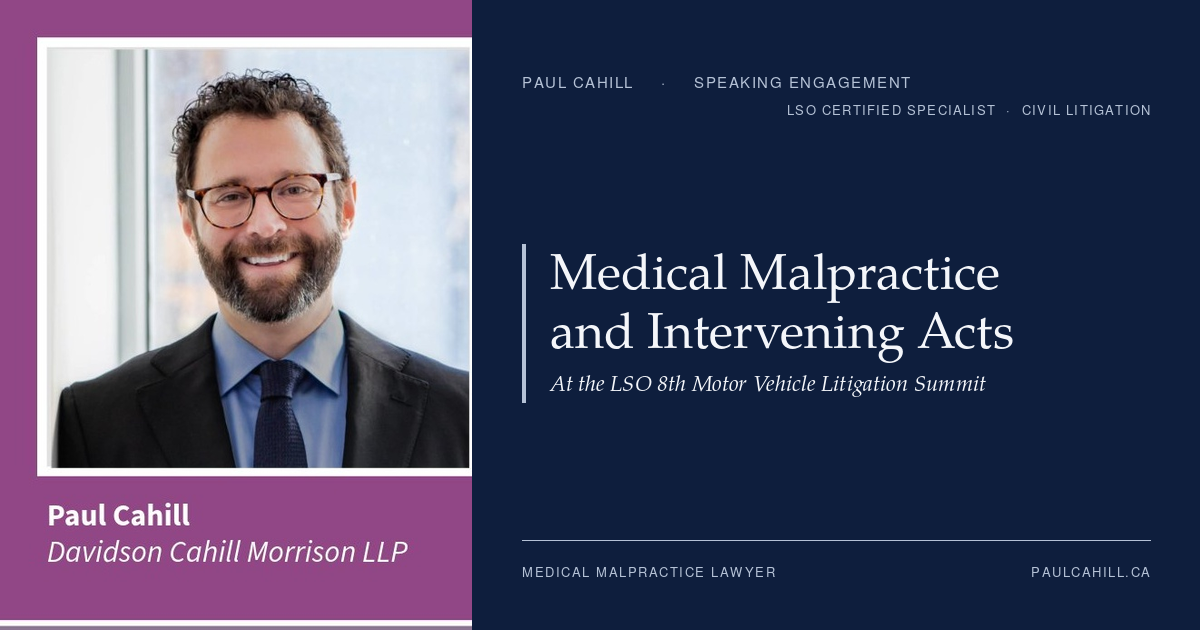
Medical malpractice as an intervening act in MVA cases. A Baines v Abounaja analysis from Paul’s 2025 LSO Motor Vehicle Litigation Summit presentation.
A settlement on behalf of a patient diagnosed with terminal metastatic cancer based on imaging alone, who lived for an extended period under a wrong diagnosis.
A settlement on behalf of a patient discharged from hospital despite signs of acute psychiatric illness, who suffered catastrophic injury within 24 hours.
How plaintiff-side PI practice works as a business: case screening, partnerships, and resourcing. From a 2024 Legal Innovation Forum panel.
A settlement on behalf of a 40-year-old woman whose hysterectomy was described as uncomplicated but resulted in injuries to both ureters and chronic disability.

A settlement on behalf of a woman in her 60s whose family physician dismissed three years of GI symptoms despite a known family history of colon cancer.
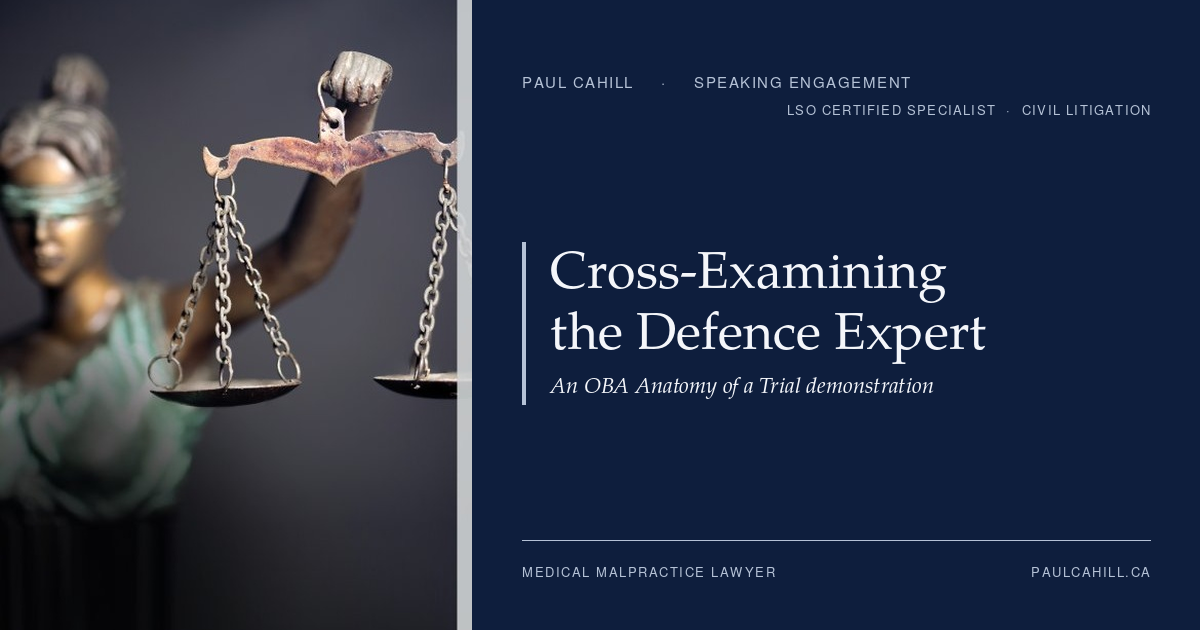
How to cross-examine the defence expert and advance your case theory. From the 2024 OBA Anatomy of a Trial continuing professional development program.
Composite card pairing the Medico-Legal Society of Toronto crest with the title Causation in Systemic Medical Negligence, on Paul Cahill’s navy brand panel.
Paul Cahill’s Winter 2023/2024 Litigator article on finding the right expert, navigating Westerhof and the Mohan/White Burgess framework, and surviving defence challenges to expert evidence at trial.
When can a defendant compel genetic testing in a medical malpractice claim? An analysis of Klinck v Dorsay and Preece v Nicholson from a 2023 OTLA paper.